


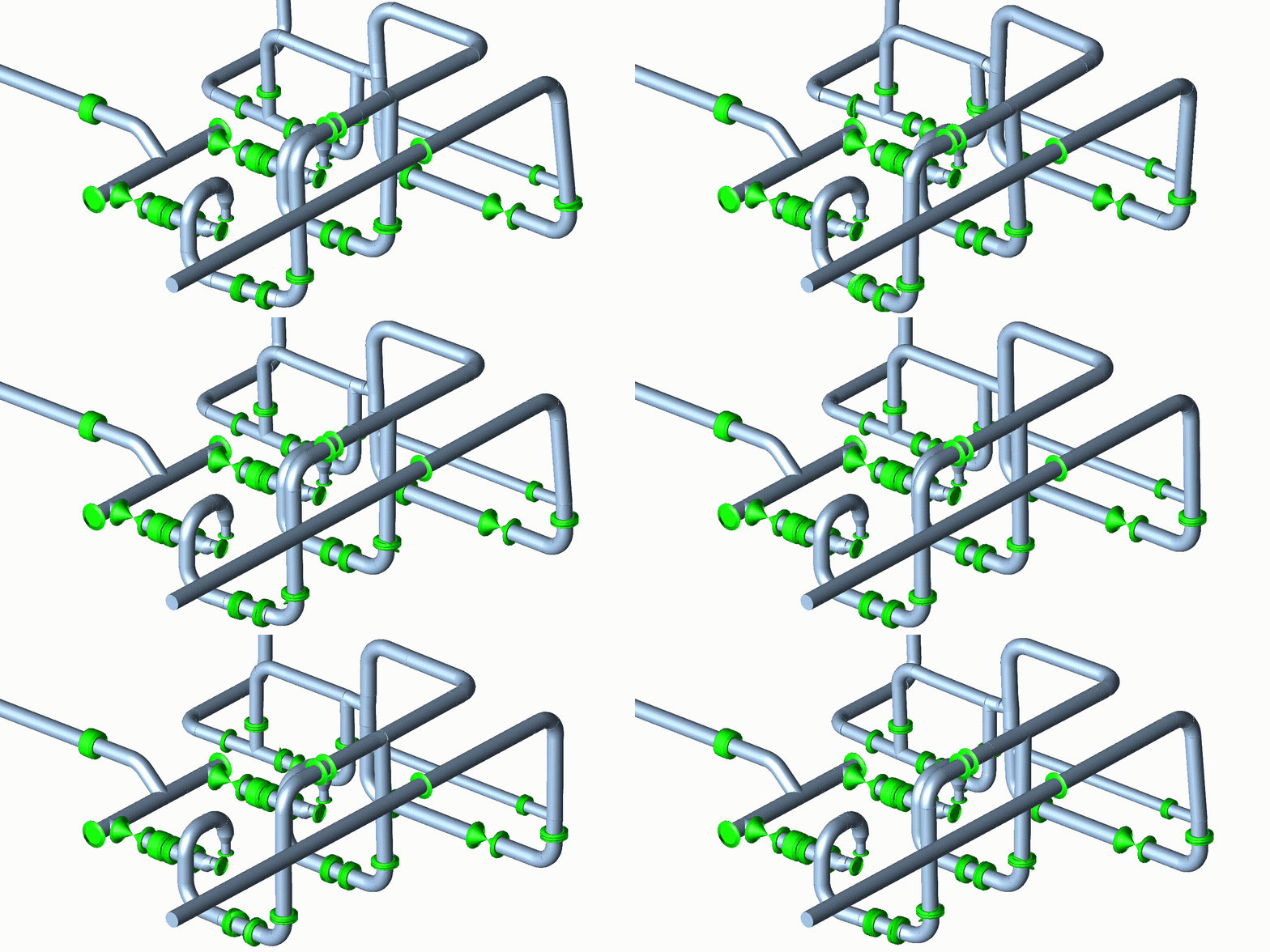
In regions prone to earthquakes, ensuring the resilience of piping systems against seismic loads is critical for the safety and continuity of industrial operations. Pipe stress analysis is fundamental in designing piping networks capable of withstanding such dynamic forces. Among the various analytical methods available, the Equivalent Static Method (ESM) and the Response Spectrum Method (RSM) are the most commonly employed for evaluating seismic stress in piping systems.
This article delves into the differences between the Equivalent Static Method and the Response Spectrum Method for seismic pipe stress analysis using mainstream pipe stress analysis software. It provides guidance on selecting the most effective approach to meet your seismic resilience requirements.
Equivalent Static Method
The Equivalent Static Method is a simplified approach where dynamic seismic forces acting on a piping system are replaced with static equivalent forces. These forces are calculated based on the system’s mass and a seismic acceleration coefficient derived from a response spectrum. This method allows for a relatively straightforward analysis of the resulting stresses and displacements on the pipes, making it particularly suitable for systems with regular geometry and predictable dynamic behavior.
Key Features of ESM:
- Load Calculation: The equivalent static load is typically developed by taking the peak spectral response (usually acceleration) obtained from a local seismic design standard. This load is then applied to the piping system in three orthogonal directions: two horizontal and one vertical.
- Conservatism: ESM is considered conservative as it tends to overestimate seismic loads and does not account for the dynamic response or damping of the piping system.
- Efficiency: The primary advantage of ESM is its speed. It is much quicker to execute than RSM
- Application Scope: ESM is often applied to small bore piping systems, typically equal to or less than 6 inches in diameter. Larger piping systems can significantly affect the design adequacy of the building’s structural steel that supports the pipes due to their substantial mass.
Advantages of ESM:
- Simplicity and speed of analysis.
- Requires less computational effort and time.
- Suitable for systems with regular geometry and predictable behavior.
Disadvantages of ESM:
- Overestimates seismic loads, potentially leading to over-designed systems.
- Does not consider the dynamic characteristics of the piping system, which may result in less accurate stress predictions.
- No Damping Consideration: It typically assumes no energy dissipation through damping, which can be unrealistic.
Response Spectrum Method
The Response Spectrum Method is a more sophisticated technique used to calculate the maximum stresses in a piping system due to an earthquake. It involves analysing the system’s response to a predefined response spectrum, which plots the maximum acceleration of a hypothetical single-degree-of-freedom system across a range of natural frequencies. This allows engineers to estimate the peak response of the piping system based on its natural vibration modes and damping characteristics without requiring the exact earthquake time history.
Key Features of RSM:
- Load Representation: Instead of analysing the full time-varying earthquake wave, RSM uses the response spectrum to provide a simplified representation of the design earthquake loading. An example of a typical response spectrum is shown below.

Credits: ASCE 7-10
- Modal Superposition: The analysis is typically performed using modal superposition, where the piping system is decomposed into its natural vibration modes. The response of each mode is calculated separately and then combined to determine the overall response.
Advantages of RSM:
- Accuracy: RSM provides a more accurate representation of seismic loads by accounting for the dynamic behavior of the piping system.
- Dynamic Response: It considers the system’s natural frequencies and damping characteristics, leading to more precise stress and displacement predictions.
Disadvantages of RSM:
- Complexity: The setup and execution of RSM are more complex compared to ESM.
- Time-Consuming: The analysis requires more computational resources and time, making it less suitable for quick assessments.
Selecting the Appropriate Method
Choosing between ESM and RSM depends on several factors, including the complexity of the piping system, the required accuracy of the analysis, available computational resources, and project timelines.
- Use ESM when:
- Conducting preliminary analyses or quick assessments.
- Dealing with small bore piping systems (≤ 6 inches in diameter).
- The piping system has regular geometry and predictable dynamic behavior.
- Conservative estimates of seismic loads are acceptable.
- Use RSM when:
- A more accurate assessment of seismic stresses is required.
- The piping system is complex, with varying geometries and dynamic responses.
- Detailed understanding of the system’s vibration modes and damping characteristics is necessary
- Resources and time are available to perform a more comprehensive analysis.
Conclusion
Both the Equivalent Static Method and the Response Spectrum Method play crucial roles in seismic pipe stress analysis. ESM offers simplicity and speed, making it suitable for specific applications where conservative estimates are acceptable. In contrast, RSM provides a more detailed and accurate assessment of seismic stresses by considering the dynamic behaviour of the piping system. Selecting the appropriate method depends on the specific requirements of your project, including the complexity of the piping system, desired accuracy, and available resources. Utilizing mainstream pipe stress analysis software can facilitate the implementation of either method, ensuring that your piping systems are resilient and compliant with seismic design standards.
Contact us if we could assist you with your pipe stress analysis needs: Contact us